
The short answer. We design wearable medical devices: wrist monitors, skin-worn patches, knee and gait monitors, stimulators and controllers for implants. On a wearable the sensor is the cheap part. The engineering goes into a clean signal from a moving body, a measurement schedule the battery can survive, and a device patients keep wearing. In mid-2026 about 30% of our ongoing projects were wearables, and one of our wearable programs, a single-use glucose monitoring patch, reached clinical trials.
What we build
Wrist monitors
Multi-parameter monitors with an oscillometric cuff, ECG, oxygen saturation, pulse and skin temperature, on a microcontroller or on embedded Linux when the device must be managed remotely.
Skin-worn patches
Single-use sensor patches with an applicator, two-week wear targets and Bluetooth, including an electrochemical glucose sensor with a proprietary needle.
Joint and gait monitors
Knee flexion and gait quality from accelerometer and gyroscope data, designed around claims the sensors can actually support.
Stimulators
Rechargeable Bluetooth stimulators with disposable pre-gelled electrodes and app control of rhythm and intensity.
Controllers for implants
Wearable hubs that turn sensor data into stimulation patterns for an implant, with the timing budget closed at the implant rather than over the radio.
Wellness wearables
Activity and heart-rate wristbands and electronics for a stress tracker, where FDA’s general wellness policy, not the device rules, sets the boundary.
Projects from our portfolio
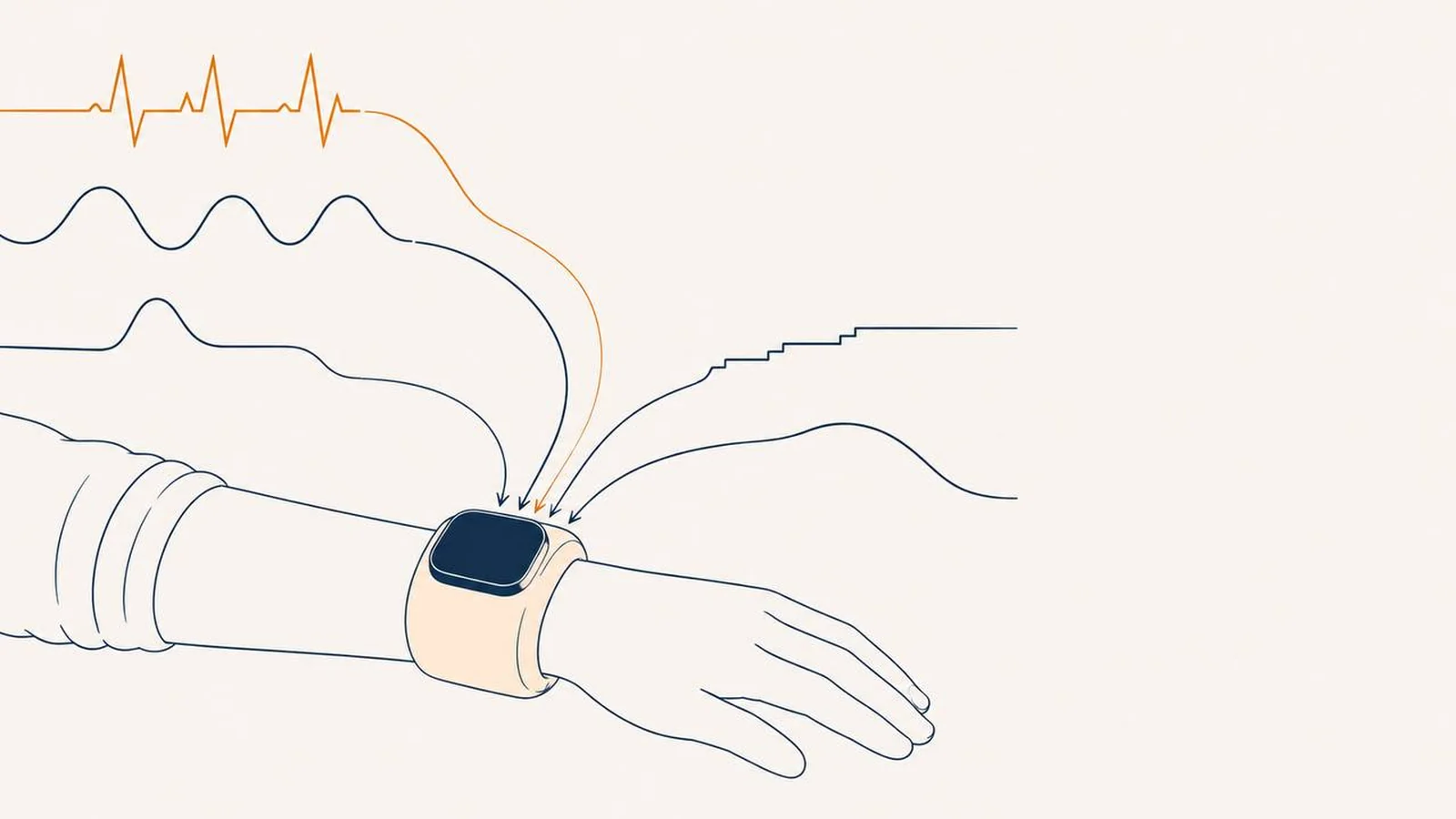
Wrist monitor with cuff blood pressure
Five vitals on one wrist; measurements scheduled so the cuff pump does not corrupt ECG and SpO2; a thermal break between the processor and the temperature sensor.
Glucose monitoring patch
Eight phases from discovery to a clinical-ready prototype, now in clinical trials, for a pharma company: 11,600 engineering hours over 1.5 years.
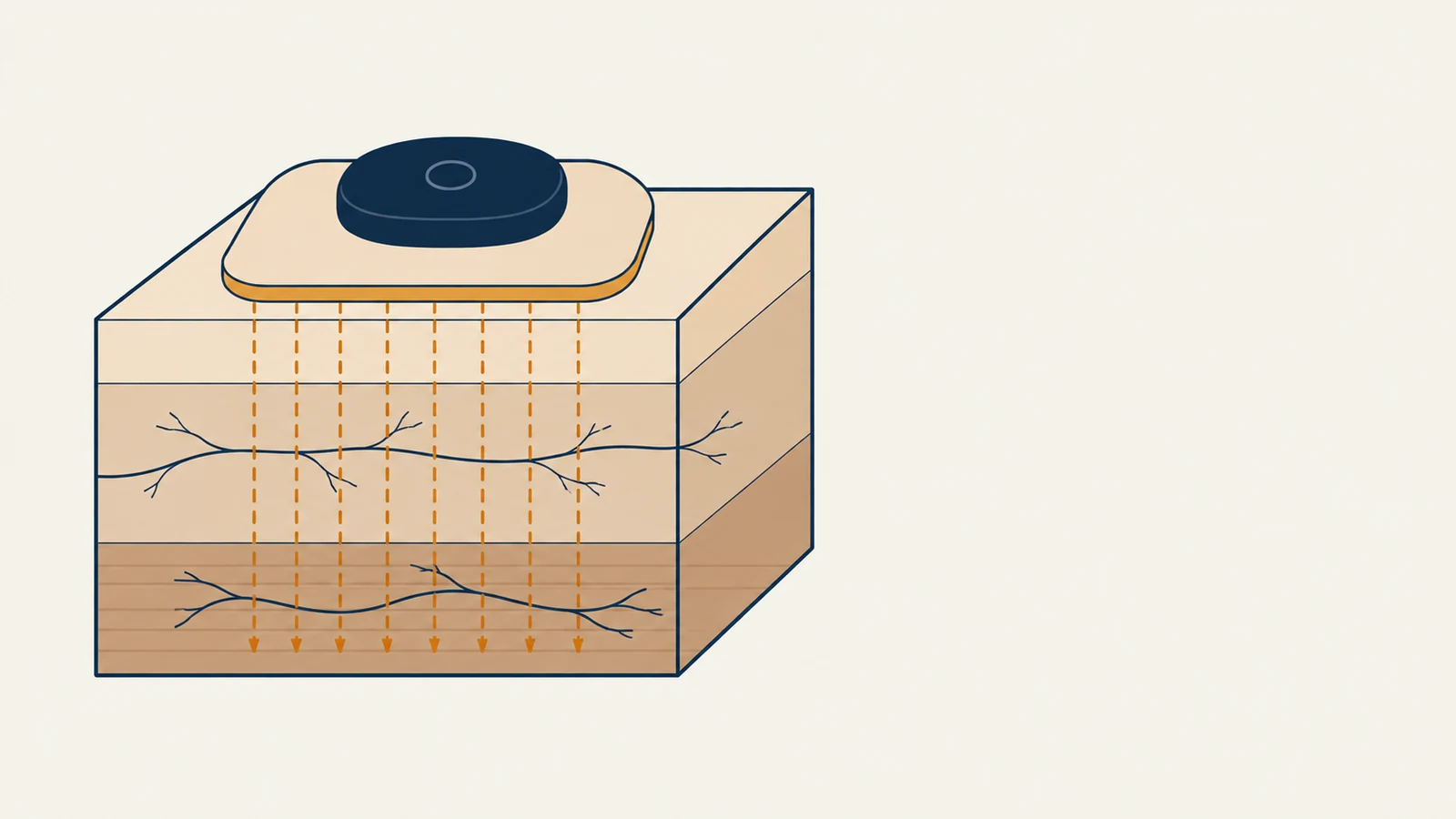
Wearable muscle stimulator
Electronics and firmware for an FDA-cleared client device, and why the output stage must be designed against an aged electrode.
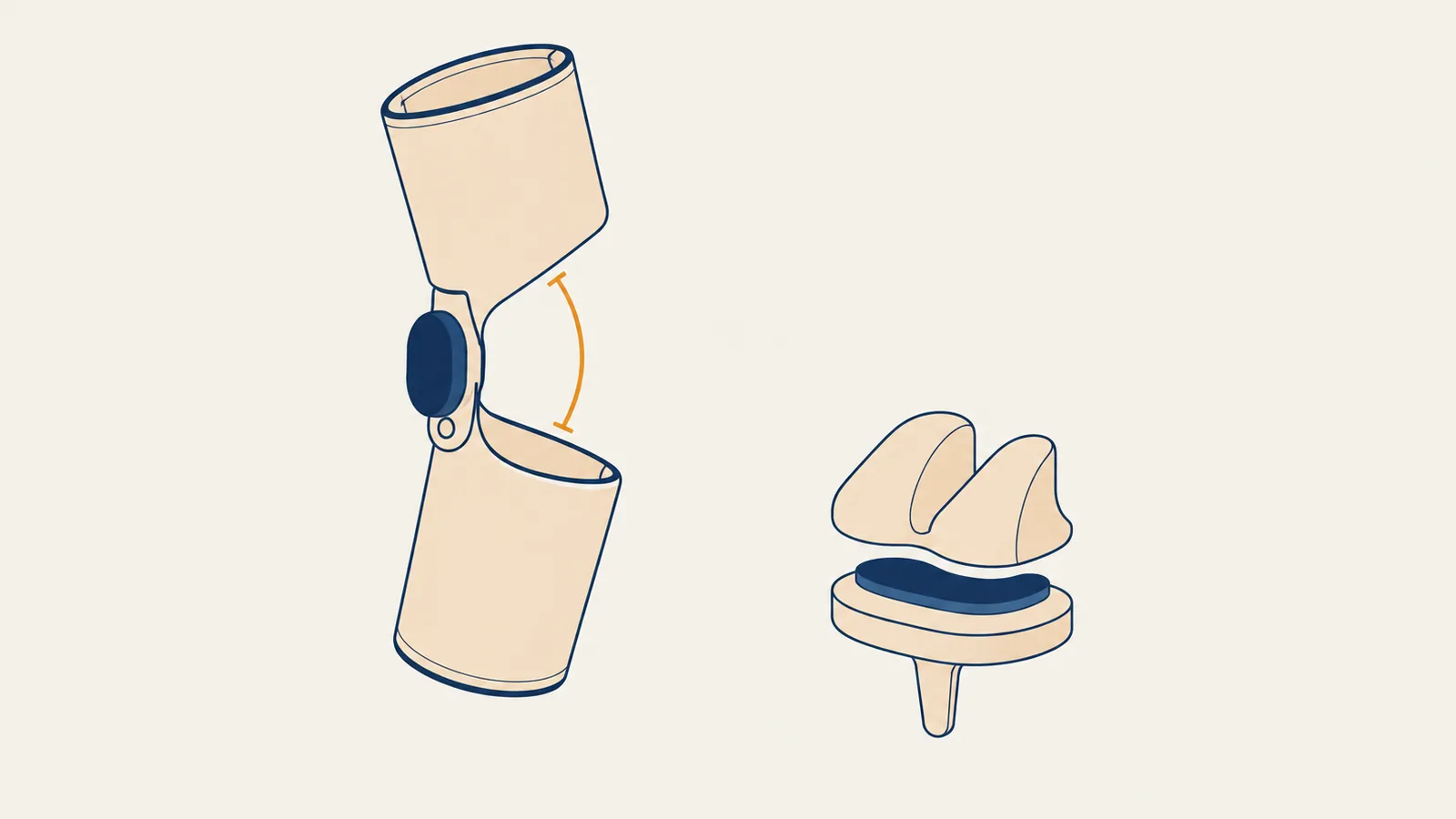
Wearable knee monitor
PCB and embedded software. Sensor error of 4 to 9 degrees against gait deficits of 4.8 to 6.6 degrees: why a knee monitor should claim change over weeks, not an absolute angle.
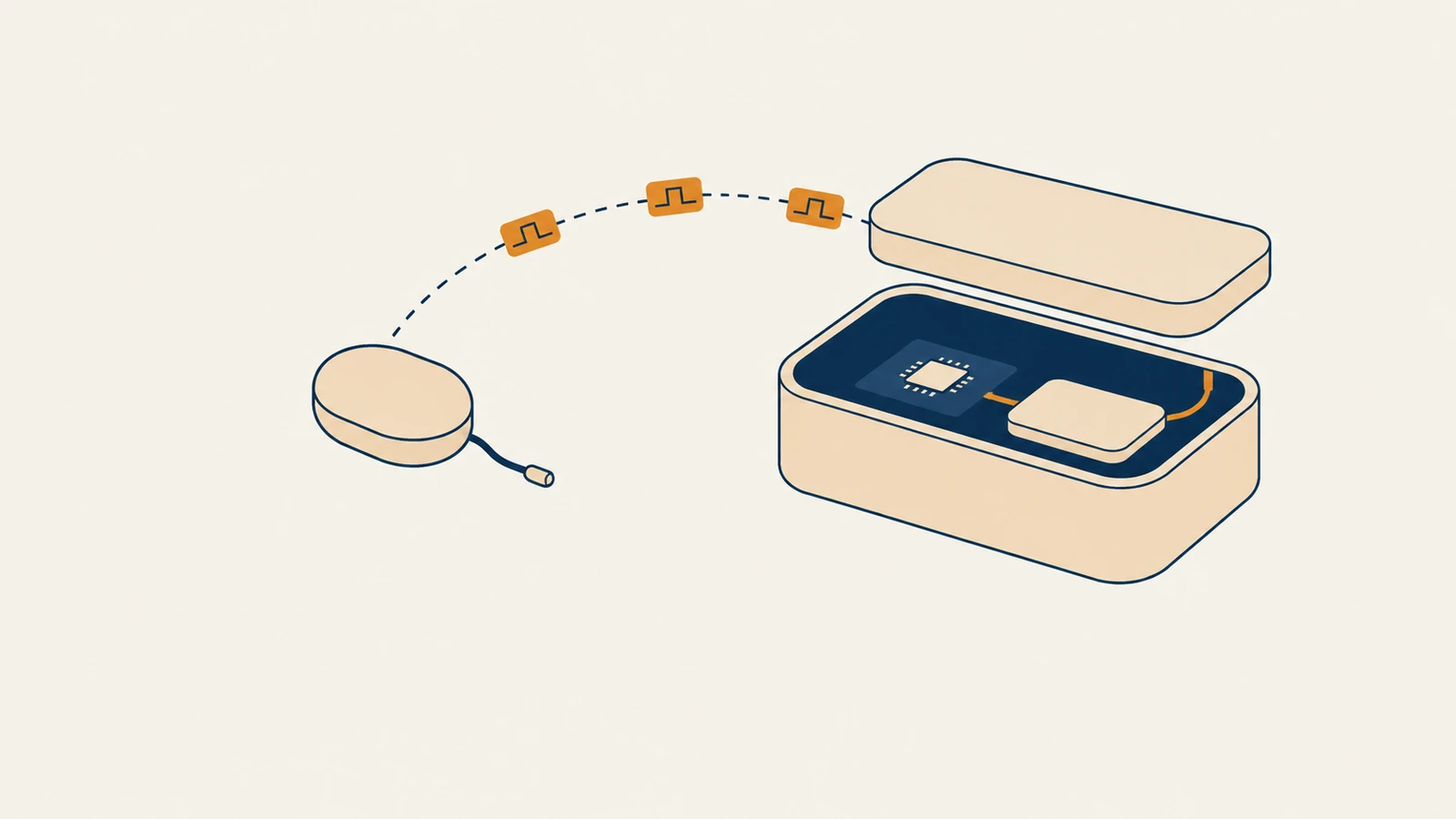
Controller for a neural implant
The radio carries stimulation patterns, not samples, because a standard BLE link cannot sit inside a millisecond control loop.
Activity wristband for older adults
Wristband with activity and heart-rate sensing for older adults; we supported pre-production and the transfer to serial production.
Engineering decisions that make or break a wearable
So first one like signal not sensor. So the sensor is a cheap part. The hard part is getting a clean signal from the body.
Build the interference matrix before the block diagram
On our wrist monitor the cuff pump injected vibration into the optical path and noise into an ECG front end that resolves microvolts, so ECG and SpO2 could not be sampled during inflation. The processor with Wi-Fi active heated the enclosure enough to bias the skin temperature reading, and the 5 GHz radio had to stay silent during ECG capture. Five concurrent measurements became a schedule. Listing every sensor pair and what one does to the other is cheap at the architecture stage and expensive if it is discovered at design for manufacturing.
The measurement schedule sets the battery and the size
Measurement cadence sets the duty cycle, the duty cycle sets the power budget, the power budget sets the cell, and the cell sets the enclosure. A requirement that reads “smartwatch size, clinical blood pressure, one week of battery” cannot be met with a cuff today, and it is cheaper to say so in discovery than at the second enclosure revision.
Microcontroller or embedded Linux
Most wearables run a low-power microcontroller. Our wrist monitor ran Yocto Linux on an i.MX8M with containers, because the client needed server-side data exchange, remote configuration in the field and measurement applications updated separately from the firmware. That choice costs runtime, thermal headroom and boot time, so we decide it against the integration requirement and write the runtime cost down in hours.
Claim what the sensors can support
Inertial sensors measure knee flexion with an error of 4.4 to 9.4 degrees against optical motion capture, and the gait deficits after knee replacement are 4.8 to 6.6 degrees. That gap is the lesson of our knee monitor program, where we designed the PCB and embedded software: a knee monitor should claim change within one patient over weeks rather than an absolute angle, keep the flexion estimate independent of the magnetometer, which in arthroplasty patients sits above a metal implant, and check how the device is put on at the start of each session.
Close fast loops locally, not over the radio
Bluetooth core specifications up to version 6.1 set the minimum connection interval at 7.5 milliseconds; version 6.2 lowers it to 375 microseconds. For a neural implant controller with a millisecond loop we kept the motion sensor wired to the hub and sent stimulation patterns over the radio, so the loop closed at the implant against a synchronized clock.
Skin, wear time and the consumable
Skin contact is a design input, not a test at the end. On the glucose patch the second prototype phase covered the applicator, tissue and model testing and small trials to find a design that does not irritate the skin over long wear. On the stimulator the disposable electrode set both the load on the output stage and the economics: our sourcing put a pre-gelled pad at $0.18 to $0.45 at 100,000 units, with the hydrogel the largest single line at $0.05 to $0.14.
We think that the next shape is a patch. So think of something like a band-aid like thin sticker you put right on the spot you care about
Published benchmarks we design against
| Parameter | Published value | Where it comes from |
|---|---|---|
| Wrist blood pressure monitor with a cuff | 115 g, 48 mm case, 14 mm thick | Omron HeartGuide instruction manual |
| Smartwatch without a cuff | 29 to 42 g, 9.7 mm thick | Apple Watch Series 10 specifications |
| Cuffless blood pressure bracelet runtime | 6 to 15 days | Aktiia battery documentation |
| Blood pressure accuracy to pass ISO 81060-2 | Mean error within 5 mmHg, standard deviation 8 mmHg or less | ISO 81060-2:2018 |
| Knee flexion error of body-worn inertial sensors | 4.4 to 6.0 degrees slow, 5.4 to 9.4 degrees fast movements | Validation against optical motion capture, 2026 |
| Gait deficit more than a year after knee replacement | 4.8 to 6.6 degrees | Systematic review, 2024 |
| Minimum BLE connection interval | 7.5 ms up to Core 6.1, 375 microseconds in Core 6.2 | Bluetooth core specifications |
| Disposable stimulation electrode at 100,000 units | $0.18 to $0.45 per pad, hydrogel $0.05 to $0.14 | OVA Solutions sourcing data |
FDA and Medicare rules that shape a wearable in 2026
Where a wellness wearable ends and a medical device begins
FDA reissued its general wellness guidance on January 6, 2026. It now says some non-invasive wearables that estimate blood pressure, oxygen saturation, blood glucose or heart rate variability can be general wellness products, if they are not implanted, not intended for diagnosis or treatment, do not prompt clinical action and do not show values that mimic clinical ones unless those values are validated. Products for screening, diagnosis, monitoring, alerting or management of a disease stay regulated, and FDA names blood pressure monitors, continuous glucose monitors and ECG devices among them. A microneedle glucose wearable is not low risk, because it penetrates the skin.
The practical line runs through the labeling, the user interface and the alerts as much as through the hardware. Words such as “clinical grade”, disease thresholds or alerts that require action move a product into device territory.
Standards and guidance for connected home-use wearables
- Wireless: FDA’s radio frequency wireless guidance is still the August 2013 final; EMC follows IEC 60601-1-2 Edition 4.1 and FDA’s June 2022 EMC guidance.
- Home use: IEC 60601-1-11 Edition 2.1 and FDA’s 2014 guidance on design considerations for devices intended for home use.
- Cybersecurity: a wearable with Bluetooth, Wi-Fi, cellular or USB and software is likely a cyber device under Section 524B and needs a vulnerability plan, update processes and an SBOM. See FDA cybersecurity requirements.
- Skin contact: ISO 10993-1:2025 is the new edition; FDA recognized it in part in May 2026 and accepts the 2018 edition until July 1, 2029.
- Batteries: IEC 62133-2 Edition 1.1 for lithium-ion cells.
- Pulse oximetry: FDA’s January 2025 draft guidance ‘Pulse Oximeters for Medical Purposes’ (performance testing and labeling) is pending; finalizing it is on FDA’s FY2027 guidance list.
How many wearable-type devices FDA cleared in 2025
| Product code | Device type | 510(k)s cleared in 2025 (2024) |
|---|---|---|
| DXN | Non-invasive blood pressure system | 28 (17) |
| DQA | Oximeter | 15 (14) |
| MHX | Physiological monitor with arrhythmia detection or alarms | 8 (5) |
| DPS | Electrocardiograph | 6 (8) |
| FLL | Continuous measurement thermometer | 6 (13) |
| DSH | Ambulatory ECG recorder (Holter) | 4 (2) |
| MSX | Network and communication system for physiological monitors | 4 (4) |
| DRG | Radiofrequency physiological signal transmitter and receiver | 3 (3) |
| QBJ | Integrated continuous glucose monitor | 2 (3) |
What Medicare pays for remote monitoring in 2026
Since January 1, 2026 Medicare pays for remote physiologic monitoring when a device sends data on as few as 2 days in a 30-day period, and the set-up code needs 2 days instead of 16. For a device team that changes the requirement: the device has to log and transmit reliably on the days it is worn, and adherence features matter more than continuous streaming.
| Code | What it pays for | 2026 national amount |
|---|---|---|
| 99453 | Remote physiologic monitoring set-up and patient education (now needs 2 days of data, not 16) | $21.71 |
| 99454 | Device supply with data on 16 to 30 days in 30 | $52.11 |
| 99445 | Device supply with data on 2 to 15 days in 30 (new in 2026) | $52.11 |
| 99457 | Treatment management, first 20 minutes in a month | $51.77 |
| 99458 | Each additional 20 minutes | $41.42 |
| 99470 | Treatment management, first 10 minutes (new in 2026) | $26.05 |
| 98977 / 98985 | Remote therapeutic monitoring, musculoskeletal device supply, 16 to 30 days / 2 to 15 days | $51.44 |
How a wearable program runs: a real example
Phases of the glucose monitoring patch we developed for a pharma company, as Lisa Voronkova described them on the Global Medical Device Podcast:
Discovery, proof of concept and design
Requirements, proof of the core function and the design that led to the first prototype.
Prototype 1
Electronics, firmware and enclosure; a batch of 100 units; bench testing and accuracy work.
Prototype 2
Optimization, the applicator, tissue and model testing, and small trials to find a design that does not irritate the skin during long wear.
Prototype 3
The clinical-ready device that goes into the study.
Clinical phase about 2,000 hours
About 30 devices; we covered the software, the protocol, support during the study and analysis of the results.
Prototype 4
Updated on the clinical findings. Total for eight phases: 11,600 engineering hours and one and a half years.
Next: design for manufacturing 5,000 to 7,000 hours
Estimated separately and priced after the clinical results, together with certification and manufacturing.
Questions
Can a wrist wearable measure blood pressure accurately?
Yes, with a cuff and with validation on the real mechanics. Validated wrist devices clear ISO 81060-2, which requires a mean error within 5 mmHg and a standard deviation of 8 mmHg or less. Most of the variance comes from cuff mechanics, band material and fit rather than the algorithm, so we validate on production mechanics as early as a functional unit exists.
How long will the battery last?
It follows from the measurement schedule. Published figures run from up to 7 days (Corsano CardioWatch) to 6 to 15 days (Aktiia), both without a cuff; devices with continuous sensing and an application processor sit at the short end. We fix the schedule first, then size the cell and the enclosure.
Microcontroller or embedded Linux?
A microcontroller unless the integration requirement says otherwise. Linux pays off when the device needs remote management, server-side data exchange or applications updated separately from firmware; it costs battery life, heat and boot time.
Is my wellness wearable a medical device?
It depends on the claims, the interface and the alerts as much as on the hardware. Under FDA’s general wellness guidance reissued on January 6, 2026, a non-invasive wearable that estimates blood pressure, SpO2, glucose or heart rate variability can stay a wellness product if it is not intended for diagnosis or treatment, does not prompt clinical action and shows validated values. Anything for screening, diagnosis, monitoring or alerting on a disease is a medical device.
What does Medicare pay for remote monitoring in 2026?
Nationally, before geographic adjustment: $21.71 for set-up (99453), $52.11 a month for device supply with 16 to 30 days of data (99454) or 2 to 15 days (99445), $51.77 for the first 20 minutes of treatment management (99457) and $26.05 for the first 10 minutes (99470).
How much does a wearable cost to develop?
In Lisa Voronkova’s ranges, a device with a clear architecture on proven technology takes 2,000 to 3,000 engineering hours ($250,000 to $375,000 at $125 per hour), and one where new mechanics, electronics and firmware work together takes 5,000 to 6,000 ($625,000 to $750,000). A single-use glucose patch with its own sensor chemistry took 11,600 hours and about $1.5 million of engineering to a clinical-ready prototype now in clinical trials. See what development costs.
Do you run biocompatibility tests?
We choose skin-contact materials, design the applicator and run early wear and irritation trials on prototypes. Formal ISO 10993 testing is done by accredited laboratories.
Related pages
Building a wearable?
Send us the sensor list and the target wear time. On a short call an engineer will tell you which measurements will fight each other and what that does to the battery.
Sources
- Lisa Voronkova on BoneChat, June 2026
- Lisa Voronkova on the Global Medical Device Podcast, September 2026
- Five vitals on one wrist: the interference problem in multi-parameter wearables
- When measurement error equals the clinical effect: a wearable knee monitor
- Jitter is the spec: a wearable controller for a neural implant
- The consumable is the product: electronics for an FDA-cleared wearable stimulator
- CMS, CY 2026 Physician Fee Schedule final rule, 90 FR 49266
- CMS, PFS relative value files RVU26A and RVU26D
- FDA, General Wellness: Policy for Low Risk Devices, January 6, 2026
- FDA, Radio Frequency Wireless Technology in Medical Devices, 2013
- FDA, Design Considerations for Devices Intended for Home Use, 2014
- IEC 60601-1-11 Edition 2.1
- ISO 10993-1:2025
- openFDA 510(k) API
Updated on October 9, 2026.