
The Internet of Things (IoT) has revolutionized countless industries, and healthcare is no exception. As demand grows for smart, connected, and reliable medical devices, the need for robust, lightweight operating systems becomes paramount.Enter this specialized real-time platform, an innovative real-time operating system (RTOS) that is transforming how IoT medical devices are developed, operated, and integrated into healthcare systems. This article explores the potential of TIZEN RT in the medtech landscape, detailing its advantages, applications, and the ways it addresses unique challenges in medical device innovation.
What is this IoT-focused RTOS?
TIZEN RT is a real-time operating system built for lightweight IoT devices that need efficient, deterministic performance. Part of the wider TIZEN project, it targets resource-constrained products such as wearables, fitness trackers and connected medical devices, offering immediate and predictable responses, scalability across hardware, and an open-source framework any developer can build on.
- Low power consumption: Essential for battery-operated devices.
- Real-time performance: Ensuring immediate and predictable responses.
- Scalability: Supporting a wide range of devices with varying hardware capabilities.
With its open-source framework, the TIZEN real-time framework is accessible to developers and companies, providing a flexible foundation for innovation.
Why this Real-Time Operating Environment is Ideal for IoT Medical Devices
IoT medical devices need an operating system that balances performance, security and scalability, and TIZEN RT is positioned on all three. It gives deterministic real-time responsiveness, a lightweight footprint that extends battery life, secure boot and encryption for patient data, interoperability with legacy and modern equipment, and open-source flexibility that lowers cost.
1. Real-Time Responsiveness
In medical applications, even a slight delay can have life-threatening consequences. This healthcare-ready RTOS’s deterministic behavior ensures:
- Accurate and immediate data processing.
- Timely alerts for critical events, such as heart rate anomalies or medication reminders.
- Seamless communication between devices in emergency scenarios.
2. Lightweight Design
Medical IoT devices often operate with constrained hardware. The real-time TIZEN system is designed for low-resource environments, enabling:
- Smooth operation on microcontrollers (MCUs) with limited memory and processing power.
- Extended battery life for portable devices like insulin pumps and ECG monitors.
3. Robust Security Features
Security is non-negotiable in healthcare. This specialized operating system’s architecture incorporates:
- Secure boot mechanisms to protect devices from unauthorized software.
- Data encryption to ensure patient privacy.
- Regular updates and patches to address vulnerabilities.
4. Interoperability and Scalability
Healthcare systems often involve a mix of legacy and modern devices. TIZEN RT’s compatibility with various hardware and protocols ensures:
- Easy integration with existing medical equipment.
- Scalability for future technology upgrades.
5. Open-Source Flexibility
The open-source nature of TIZEN RT fosters collaboration and customization, allowing:
- Developers to tailor solutions to specific medical applications.
- Faster innovation cycles.
- Reduced costs compared to proprietary operating systems.
Applications of TIZEN RT in Medical Devices
TIZEN RT appears in five kinds of connected medical product: wearable health monitors, remote patient monitoring systems, smart diagnostic tools, medication management systems and peripheral devices around surgical robots. The common thread is a small, connected device that has to process data in real time and transmit it securely. The table below compares them.
| Device family | What TIZEN RT provides |
|---|---|
| Wearable health monitors | Low power consumption and real-time processing for continuous vital-sign monitoring, data synchronisation with smartphones and healthcare systems, and alerts on abnormal conditions |
| Remote patient monitoring systems | Measurement of glucose, blood pressure and heart rate, secure transmission to healthcare providers, and timely medical intervention for chronic illness |
| Smart diagnostic tools | Quick, accurate point-of-care results, integration with cloud-based analytics platforms, and real-time guidance for healthcare professionals |
| Medication management systems | Precise dosing in smart pill dispensers and infusion pumps, plus reminders and the reliability those devices depend on |
| Surgical assistance peripherals | Support for devices around the procedure — real-time imaging tools and connected sensors — rather than the complex robotics itself |
Addressing Challenges in IoT Medical Device Development
Four development challenges are addressed in this article: meeting regulatory standards such as FDA clearance or CE marking, making devices interoperable across mixed healthcare environments, keeping development cost under control, and delivering a usable experience. TIZEN RT contributes reliable data logs, protocol support, open-source licensing and consistent performance.
Regulatory Compliance
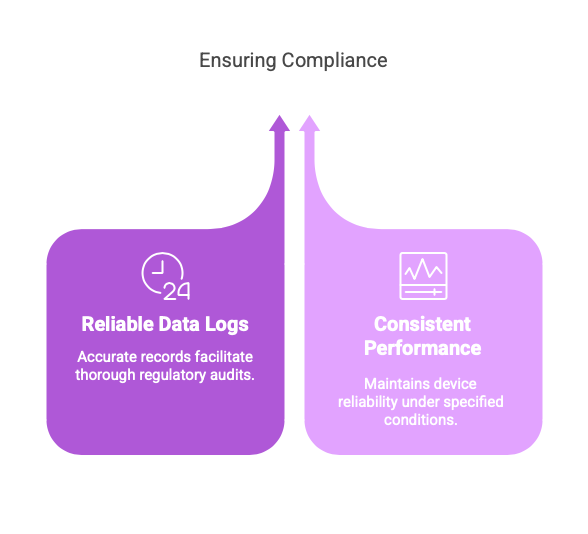
Medical devices must meet stringent regulatory standards like FDA or CE marking. TIZEN RT’s deterministic behavior and security features simplify compliance by:
- Providing reliable data logs for audits.
- Ensuring consistent performance under defined conditions.
Device Interoperability
Healthcare environments often require seamless communication between devices. TIZEN RT supports various protocols and standards, enabling smooth integration.
Cost Efficiency
Developing medical devices can be expensive. TIZEN RT’s open-source framework reduces licensing costs and accelerates development timelines, offering better ROI for manufacturers.
User Experience
Intuitive interfaces are critical for patient and clinician adoption. TIZEN RT’s lightweight architecture supports responsive and user-friendly designs, even on resource-constrained devices.
The Future of TIZEN RT in Medtech
Three advances are expected as the ecosystem evolves: deeper AI integration for real-time processing behind AI-powered diagnostics and predictive analytics, 5G connectivity for faster transmission and lower latency in remote monitoring, and edge computing capabilities that process data locally for faster and more reliable performance.
- Enhanced AI Integration: Real-time processing for AI-powered diagnostics and predictive analytics.
- 5G Connectivity: Improved data transmission speeds and reduced latency for remote monitoring devices.
- Edge Computing Capabilities: Localized data processing for faster and more reliable performance.
Conclusion
TIZEN RT is revolutionizing the development of IoT medical devices by providing a robust, lightweight, and secure operating system tailored to the unique demands of healthcare. From wearable monitors to remote patient management tools, its applications are vast and impactful. As medtech innovation accelerates, TIZEN RT will undoubtedly play a pivotal role in shaping the future of connected healthcare solutions.
For more insights into medical device engineering, visit our comprehensive guide to optical medical device commercialization.
Frequently Asked Questions About TIZEN RT
What is TIZEN RT?
TIZEN RT is a real-time operating system designed for lightweight IoT devices that need efficient and deterministic performance. Developed as part of the broader TIZEN project, it targets devices with limited resources — wearables, fitness trackers and connected medical devices — and its open-source framework is free for developers and companies to build on.
Why is TIZEN RT suited to IoT medical devices?
Because it balances the three things such devices need. Its deterministic behaviour gives immediate, predictable responses; its lightweight design leaves more of the hardware budget for battery life; secure boot, encryption and regular patches protect patient data; and its compatibility with varied hardware and protocols keeps it interoperable and scalable.
Which medical devices run on TIZEN RT?
Five families are covered here: wearable health monitors such as fitness trackers and smartwatches, remote patient monitoring systems for chronic illness, point-of-care smart diagnostic tools, medication management systems including smart pill dispensers and infusion pumps, and peripheral devices that assist surgeons, such as imaging tools and connected sensors.
How does TIZEN RT handle security?
Its architecture includes secure boot mechanisms that stop unauthorised software from running, data encryption to protect patient privacy, and regular updates and patches to close vulnerabilities as they appear. Security in healthcare is non-negotiable, which is why these features sit inside the platform rather than being bolted on afterwards.
Does TIZEN RT help with regulatory compliance?
It does not remove the requirement, but it makes the evidence easier to produce. Medical devices must meet stringent standards such as FDA clearance or CE marking, and TIZEN RT contributes reliable data logs for audits and consistent performance under defined conditions — both of which are what a reviewer looks for.
Is TIZEN RT suitable for surgical robots?
Not for the complex robotics itself. Lightweight RTOS platforms like TIZEN RT are not typically used for that, but they can run the peripheral devices around the procedure — real-time imaging tools or connected sensors that assist the surgeon — where a small deterministic system is the better fit.
What is next for TIZEN RT in medtech?
Three advances are expected. Enhanced AI integration would bring real-time processing for AI-powered diagnostics and predictive analytics. 5G connectivity would improve data transmission speeds and reduce latency for remote monitoring devices. And edge computing capabilities would localise data processing for faster and more reliable performance.